
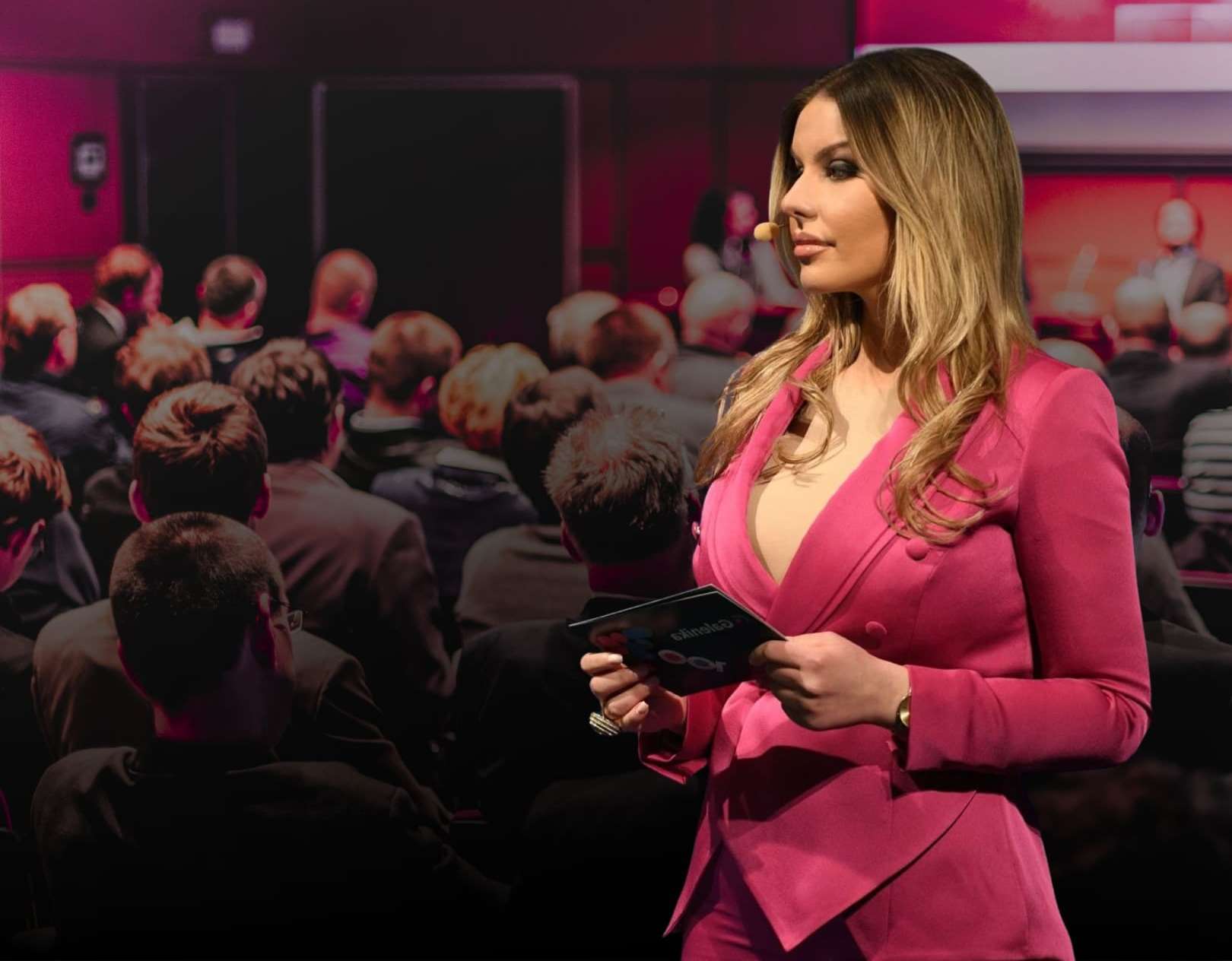
Stage Crisis: 5 Ways How Professional MC Protects The Event
Trusting your in-house talent with the stage sometimes seems like a reasonable budget decision – they already know the company, they know the topic, and they are perfectly capable of delivering content competently. But what they are not trained for is how they respond when everything doesn’t go according to plan. Knowing your subject and knowing how to carry a room under pressure are two entirely different skills. And it is exactly what separates a professional MC from everyone else you might consider putting at the microphone.
Here are some typical situations – you already know them, we’ve all seen it:
The AV failure mid-programme.
Every amateur’s worst dread. The video which won’t load. Keynote speaker joining from the other side of the world, but Teams won’t cooperate. Wrong visual displayed by mistake. The sound suddenly cut out. The technical team is troubleshooting and nobody knows if it will take a couple of seconds or five minutes. There are 200 people in the room sitting in silence. This is the moment that defines an MC. The wrong response – visible panic, awkward filler, dead air – permanently damages the event’s atmosphere.
The speaker cancels two hours before.
Confirmed for months, gone this morning. Now the programme has a 45-minute hole which the organiser discovered at breakfast. By the time the event starts, an experienced MC has restructured the afternoon, created a spontaneous Q&A session, extended two panel discussions and the audience never even noticed that the speaker didn’t show up.
The panel that spirals out of control.
Strong personalities on stage, a controversial topic, and no professional authority managing the clock. One panellist dominates, another scrolls on their phone, a third gives a 7-minute answer to a yes-or-no question. The audience is uncomfortable, the organisers are helpless and the Q&A has two minutes left for what was supposed to be the most engaging part of the day. A professional MC moderates, redirects, manages egos gracefully, and salvages the session without making anyone feel managed.
The speaker who casually runs 20 minutes over.
The keynote was scheduled for 20 minutes. It ran 38. The rest of the programme is now a domino effect of delays, the food is getting cold, the next speaker is pacing backstage, and 300 people are sitting in seats they’ve been in too long. Every minute of recovery depends entirely on the MC’s ability to restructure the remaining programme invisibly and keep the audience from realising anything went wrong.
The room that goes completely cold.
Everything is technically working – speakers are well prepared, the production is flawless, and yet the energy in the room is dead – somewhere between the second and third presenter, the audience simply checked out. Eyes are glazing, people are on their phones or even leaving the room early. The connection between stage and audience has broken. This is the hardest crisis to manage because it’s invisible and nobody will name it. A strong MC feels it before it’s visible, adjusts the pace, injects the right energy, and brings the room back.
None of these situations are hypothetical or extraordinary. They happen frequently – sometimes all five in the same afternoon. The difference between an event that recovers and one that doesn’t is almost always the same thing: who is protecting it.
Hristina Stojiljković is a professional MC and event host based in Belgrade, available for corporate events, conferences and high-stakes occasions across the region and internationally. Feel free to send me an e-mail to: inquiries@hristinastojiljkovic.com.